Tariffs reborn under a new guise? After the Supreme Court rejected IEEPA, Trump wielded three new weapons.
2026-02-24 14:36:37
After the U.S. Supreme Court rejected President Trump's power to unilaterally impose tariffs under the International Emergency Economic Powers Act (IEEPA) last Friday (February 20), the White House quickly turned to multiple alternative legal paths in an attempt to maintain its aggressive trade protectionist agenda.
Despite legal setbacks, Trump stated on social media that he could impose new tariffs "without congressional approval" and warned of "higher tariffs and tougher measures." However, whether this path of action can be implemented remains constrained by three key variables: congressional attitude, the risk of international retaliation, and a new round of judicial review.
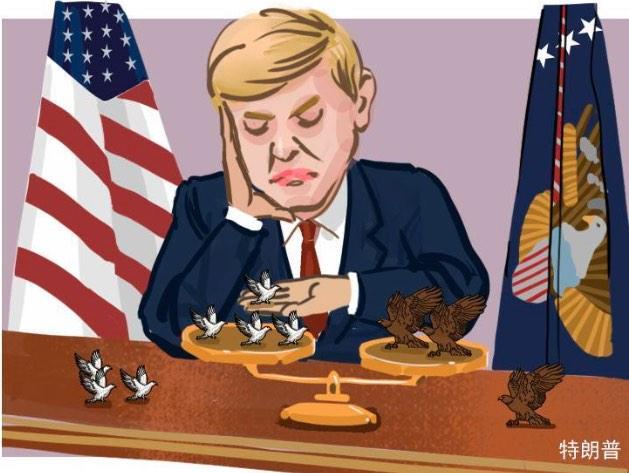
President Trump's tariff strategy has taken a major turn following a pivotal ruling by the U.S. Supreme Court on February 20. The ruling, passed 6-3 with a majority opinion written by Chief Justice John Roberts, explicitly states that the International Emergency Economic Powers Act does not authorize the president to unilaterally impose tariffs in peacetime.
The court emphasized that the Constitution exclusively grants Congress the power to tax (including tariffs). Previously, Trump's massive tariffs on almost all imported goods under IEEPA—including the hefty tariffs he called "Liberation Day" on April 2nd of last year—have been declared invalid. The amount involved could be as high as tens of billions of dollars, and those already levied face pressure for refunds and the risk of legal repercussions.
Following the ruling, the market reacted swiftly. On Monday, US stocks experienced a significant sell-off: the Dow Jones Industrial Average fell nearly 700 points, a drop of about 1.4%; the S&P 500 fell 1%; and the Nasdaq fell 1.1%.
The Supreme Court ruling had a negative impact on the dollar in the short term, as it undermined policy credibility and triggered a rapid sell-off. However, supported by hawkish comments from the Federal Reserve and the effects of inflation, the dollar subsequently rebounded. During Tuesday's Asian and European sessions, the dollar index fluctuated narrowly around 97.80.
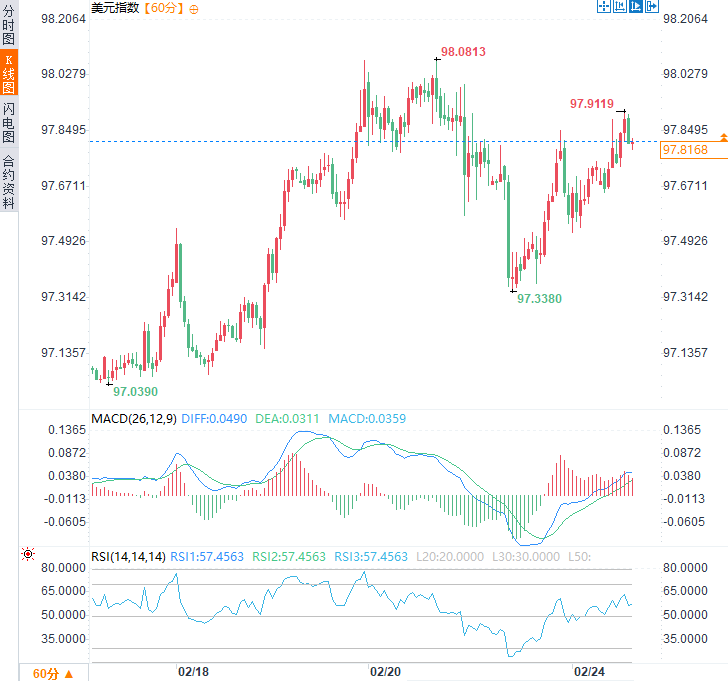
(US Dollar Index hourly chart, source: FX678)
"Uncertainty remains high," noted Jim Reid, a research strategist at Deutsche Bank. Investors are concerned that the Trump administration will take more aggressive alternative measures, further escalating trade tensions.
Despite legal setbacks, the Trump administration immediately turned to other legal tools in an attempt to maintain its hardline protectionist trade policy. Trump reiterated on social media that he could impose new tariffs "without congressional approval" and warned other countries that they might face "higher tariffs and tougher measures."
U.S. Trade Representative Jamison Greer stated that the president's policies "have not changed," and the White House is planning to "rebuild" a set of aggressive tariffs targeting specific countries. The main pathways include the following:
Section 301: The most flexible broad-spectrum tariff tool
The White House has invoked Section 301 of the Trade Act of 1974 to launch a new investigation. This section allows for the imposition of tariffs after determining that a foreign country has engaged in "unfair, unreasonable, discriminatory, or burdensome" conduct. The investigation will focus on areas including: forced labor; drug pricing; discrimination against U.S. technology companies; and trade in specific commodities such as seafood and rice.
Greer revealed that the potential scope of application is "most trading partners." Section 301 grants the president considerable discretion, with relatively open scope and duration for tariffs (re-authorization is required every four years). A 2024 analysis by the conservative think tank Cato Institute concluded that while the section has certain procedural limitations, it remains one of the most powerful legal tools for the president to implement broad trade restrictions.
Article 232: Industry Protection in the Name of National Security
The Trump administration will continue to maintain and expand industry-specific tariffs under Section 232 of the Trade Expansion Act of 1962, such as the already imposed 50% tariffs on steel and aluminum. The Department of Commerce is currently advancing several Section 232 investigations, potentially covering areas such as pharmaceuticals, aircraft, wind turbines, movies, and certain semiconductors.
These tariffs are levied on the grounds of "national security" and require the Commerce Department to conduct a formal investigation, but the process is relatively independent of Congress.
Article 122: Short-term emergency global tariff buffer
Trump swiftly invoked Section 122 of the Trade Act of 1974, announcing a temporary 15% tariff on almost all imported goods (some reports indicate an initial 10%, which was subsequently increased), effective for a maximum of 150 days. This section addresses "basic issues of international payments," does not require prior congressional approval, but must be extended by a congressional vote upon expiration; otherwise, it automatically expires.
This move provides the White House with a short-term buffer window, while also allowing room for congressional intervention and potential opposition. Analysts point out that while the Section 122 tariffs can be implemented quickly, their temporary nature and congressional resistance increase subsequent uncertainty.
Trump acknowledged at the White House last Friday that the new path is "a little longer," but stressed that he would launch more investigations as a means to impose additional tariffs. Overall, the Supreme Court ruling significantly reduced the president's ability to bypass Congress through emergency powers, but did not end protectionist trade policies.
Future policy direction depends on three major factors:
The US Congress's stance : whether to cooperate in extending Section 122, or to impose further restrictions on the 301/232 measures;
Risk of international retaliation : Countermeasures from trading partners could exacerbate global supply chain tensions;
Legal challenges ahead : Will the new tariffs face a new round of judicial review?
Trade policy uncertainty will continue to impact global supply chains, market performance, and inflation expectations. Market participants need to closely monitor subsequent actions by the White House, congressional developments, and responses from major trading partners.
At 14:36 Beijing time, the US dollar index is currently at 97.81.
Despite legal setbacks, Trump stated on social media that he could impose new tariffs "without congressional approval" and warned of "higher tariffs and tougher measures." However, whether this path of action can be implemented remains constrained by three key variables: congressional attitude, the risk of international retaliation, and a new round of judicial review.
Landmark ruling by the US Supreme Court: IEEPA's tariff powers denied.
President Trump's tariff strategy has taken a major turn following a pivotal ruling by the U.S. Supreme Court on February 20. The ruling, passed 6-3 with a majority opinion written by Chief Justice John Roberts, explicitly states that the International Emergency Economic Powers Act does not authorize the president to unilaterally impose tariffs in peacetime.
The court emphasized that the Constitution exclusively grants Congress the power to tax (including tariffs). Previously, Trump's massive tariffs on almost all imported goods under IEEPA—including the hefty tariffs he called "Liberation Day" on April 2nd of last year—have been declared invalid. The amount involved could be as high as tens of billions of dollars, and those already levied face pressure for refunds and the risk of legal repercussions.
Markets react sharply: Uncertainty looms over US stocks and the US dollar.
Following the ruling, the market reacted swiftly. On Monday, US stocks experienced a significant sell-off: the Dow Jones Industrial Average fell nearly 700 points, a drop of about 1.4%; the S&P 500 fell 1%; and the Nasdaq fell 1.1%.
The Supreme Court ruling had a negative impact on the dollar in the short term, as it undermined policy credibility and triggered a rapid sell-off. However, supported by hawkish comments from the Federal Reserve and the effects of inflation, the dollar subsequently rebounded. During Tuesday's Asian and European sessions, the dollar index fluctuated narrowly around 97.80.
(US Dollar Index hourly chart, source: FX678)
"Uncertainty remains high," noted Jim Reid, a research strategist at Deutsche Bank. Investors are concerned that the Trump administration will take more aggressive alternative measures, further escalating trade tensions.
The White House is rapidly shifting course: pursuing multiple legal paths in parallel.
Despite legal setbacks, the Trump administration immediately turned to other legal tools in an attempt to maintain its hardline protectionist trade policy. Trump reiterated on social media that he could impose new tariffs "without congressional approval" and warned other countries that they might face "higher tariffs and tougher measures."
U.S. Trade Representative Jamison Greer stated that the president's policies "have not changed," and the White House is planning to "rebuild" a set of aggressive tariffs targeting specific countries. The main pathways include the following:
Section 301: The most flexible broad-spectrum tariff tool
The White House has invoked Section 301 of the Trade Act of 1974 to launch a new investigation. This section allows for the imposition of tariffs after determining that a foreign country has engaged in "unfair, unreasonable, discriminatory, or burdensome" conduct. The investigation will focus on areas including: forced labor; drug pricing; discrimination against U.S. technology companies; and trade in specific commodities such as seafood and rice.
Greer revealed that the potential scope of application is "most trading partners." Section 301 grants the president considerable discretion, with relatively open scope and duration for tariffs (re-authorization is required every four years). A 2024 analysis by the conservative think tank Cato Institute concluded that while the section has certain procedural limitations, it remains one of the most powerful legal tools for the president to implement broad trade restrictions.
Article 232: Industry Protection in the Name of National Security
The Trump administration will continue to maintain and expand industry-specific tariffs under Section 232 of the Trade Expansion Act of 1962, such as the already imposed 50% tariffs on steel and aluminum. The Department of Commerce is currently advancing several Section 232 investigations, potentially covering areas such as pharmaceuticals, aircraft, wind turbines, movies, and certain semiconductors.
These tariffs are levied on the grounds of "national security" and require the Commerce Department to conduct a formal investigation, but the process is relatively independent of Congress.
Article 122: Short-term emergency global tariff buffer
Trump swiftly invoked Section 122 of the Trade Act of 1974, announcing a temporary 15% tariff on almost all imported goods (some reports indicate an initial 10%, which was subsequently increased), effective for a maximum of 150 days. This section addresses "basic issues of international payments," does not require prior congressional approval, but must be extended by a congressional vote upon expiration; otherwise, it automatically expires.
This move provides the White House with a short-term buffer window, while also allowing room for congressional intervention and potential opposition. Analysts point out that while the Section 122 tariffs can be implemented quickly, their temporary nature and congressional resistance increase subsequent uncertainty.
Three key variables for future trends
Trump acknowledged at the White House last Friday that the new path is "a little longer," but stressed that he would launch more investigations as a means to impose additional tariffs. Overall, the Supreme Court ruling significantly reduced the president's ability to bypass Congress through emergency powers, but did not end protectionist trade policies.
Future policy direction depends on three major factors:
The US Congress's stance : whether to cooperate in extending Section 122, or to impose further restrictions on the 301/232 measures;
Risk of international retaliation : Countermeasures from trading partners could exacerbate global supply chain tensions;
Legal challenges ahead : Will the new tariffs face a new round of judicial review?
Trade policy uncertainty will continue to impact global supply chains, market performance, and inflation expectations. Market participants need to closely monitor subsequent actions by the White House, congressional developments, and responses from major trading partners.
At 14:36 Beijing time, the US dollar index is currently at 97.81.
- Risk Warning and Disclaimer
- The market involves risk, and trading may not be suitable for all investors. This article is for reference only and does not constitute personal investment advice, nor does it take into account certain users’ specific investment objectives, financial situation, or other needs. Any investment decisions made based on this information are at your own risk.