Gold's rebound stalled due to structural divergence in US inflation and hawkish expectations from the Federal Reserve.
2026-06-11 14:58:27
During Thursday's Asian trading session, spot gold (XAU/USD) rebounded modestly from its previous lows, rising to around $4,118 per ounce at one point and temporarily holding above its lowest level since November 2025, reached earlier in the day. However, the gold rebound was largely driven by short covering, and the overall market environment remained dominated by a strong dollar and high interest rate expectations, limiting further upside for the precious metal.

The latest inflation data released in the United States shows a divergence in price pressures. Data from the U.S. Department of Labor shows that the core Consumer Price Index (CPI), excluding food and energy prices, rose 0.2% month-on-month in May, a slowdown from the previous month's 0.4%, while remaining at 2.9% year-on-year, in line with market expectations. The cooling of core inflation eased market concerns about runaway inflation, briefly weakening the dollar and prompting a technical rebound in gold prices.
However, overall inflationary pressures remain significant. Affected by a sharp rise in energy prices, the US overall CPI rose 4.2% year-on-year in May from 3.8% in April, reaching its highest level in nearly three years, with energy prices rising 23.5% year-on-year. Meanwhile, military tensions between the US and Iran continue to escalate. Following a new round of US military action, Iran announced the closure of the Strait of Hormuz and stated it would respond forcefully to any related actions.
With the Strait of Hormuz handling approximately 20% of global seaborne crude oil transport, market concerns about potential energy supply disruptions have driven international oil prices back from previous lows, further intensifying concerns about future inflationary pressures. Currently, the market anticipates a roughly 70% probability of further interest rate hikes by the Federal Reserve this year. Higher interest rate expectations support US Treasury yields and the dollar's performance, increasing the opportunity cost of holding gold, a non-interest-bearing asset, thus exerting sustained downward pressure on gold prices.
From a technical perspective, the daily chart shows that gold has broken below the key 200-day simple moving average and the lower trendline of the previous descending channel, indicating that the medium- to long-term trend remains bearish. The MACD indicator continues to be below the zero line, reflecting strong downward momentum. However, the RSI indicator has entered oversold territory, suggesting that the potential for further significant declines in the short term may be limited, and gold may require a technical correction.
If gold prices rebound further, the first level to watch is the channel breakout resistance around $4250, followed by the important resistance level at the 200-day moving average area around $4400, with higher resistance around the upper trendline of the descending channel at approximately $4550. Unless prices fail to regain control of these key resistance areas, the current rebound is more likely to be seen as a correction within a downtrend rather than a trend reversal.
From a 4-hour chart perspective, although gold has rebounded from its short-term lows, it remains within a downtrend structure. Short-term moving averages are still bearishly aligned, and market sentiment is easily influenced by US PPI data, changes in US Treasury yields, and news from the Middle East. If PPI data continues to show inflationary pressures, market expectations for a hawkish Fed policy may strengthen further, and gold may retest previous lows. Conversely, if inflation data cools or the dollar weakens, a short-term rebound in gold prices cannot be ruled out.
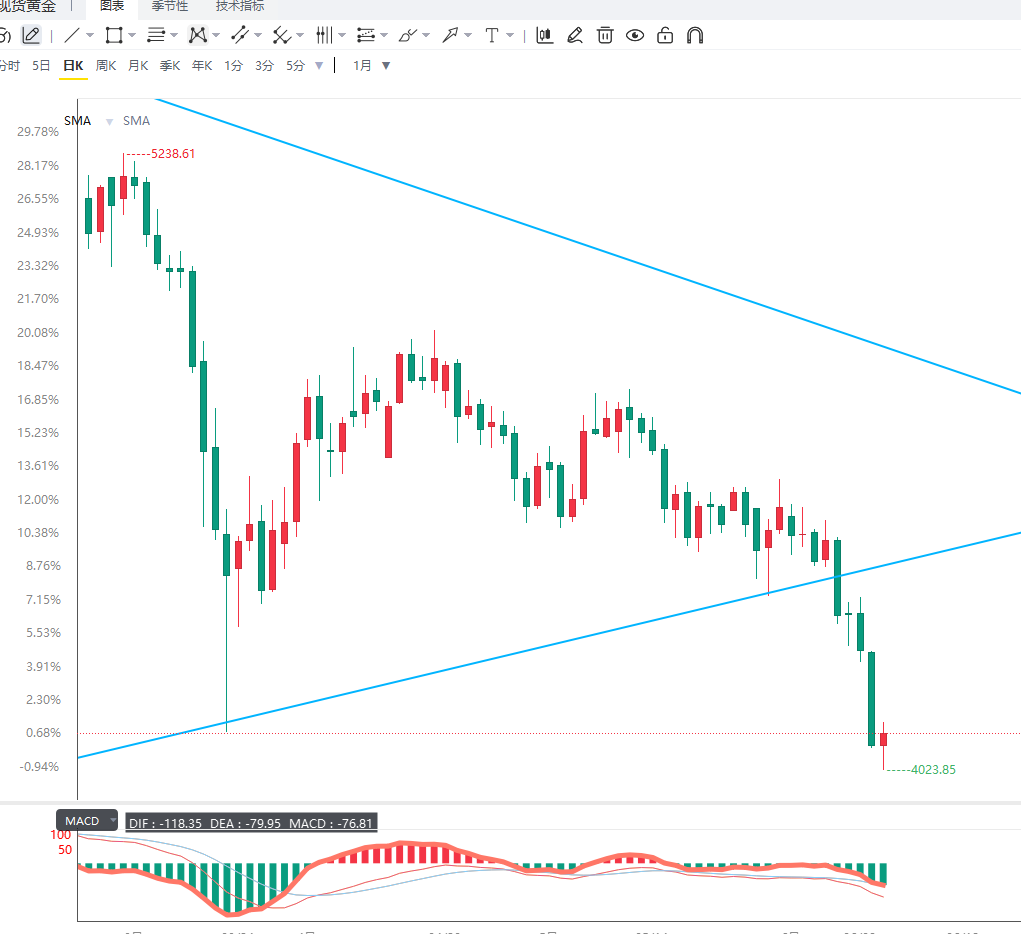
Editor's Summary : The current gold market is influenced by a triple factor: inflation, monetary policy, and geopolitical risks. While the slowdown in core CPI has provided a brief respite for gold, rising energy prices and escalating tensions in the Middle East have reignited inflation concerns, increasing market expectations that the Federal Reserve will continue its tightening policy. Against the backdrop of a strong dollar and US Treasury yields, the overall trend for gold remains downward. In the short term, close attention should be paid to US PPI data and developments in the Middle East. If key technical resistance levels cannot be broken, the rebound may still be considered a correction phase.
The latest inflation data released in the United States shows a divergence in price pressures. Data from the U.S. Department of Labor shows that the core Consumer Price Index (CPI), excluding food and energy prices, rose 0.2% month-on-month in May, a slowdown from the previous month's 0.4%, while remaining at 2.9% year-on-year, in line with market expectations. The cooling of core inflation eased market concerns about runaway inflation, briefly weakening the dollar and prompting a technical rebound in gold prices.
However, overall inflationary pressures remain significant. Affected by a sharp rise in energy prices, the US overall CPI rose 4.2% year-on-year in May from 3.8% in April, reaching its highest level in nearly three years, with energy prices rising 23.5% year-on-year. Meanwhile, military tensions between the US and Iran continue to escalate. Following a new round of US military action, Iran announced the closure of the Strait of Hormuz and stated it would respond forcefully to any related actions.
With the Strait of Hormuz handling approximately 20% of global seaborne crude oil transport, market concerns about potential energy supply disruptions have driven international oil prices back from previous lows, further intensifying concerns about future inflationary pressures. Currently, the market anticipates a roughly 70% probability of further interest rate hikes by the Federal Reserve this year. Higher interest rate expectations support US Treasury yields and the dollar's performance, increasing the opportunity cost of holding gold, a non-interest-bearing asset, thus exerting sustained downward pressure on gold prices.
From a technical perspective, the daily chart shows that gold has broken below the key 200-day simple moving average and the lower trendline of the previous descending channel, indicating that the medium- to long-term trend remains bearish. The MACD indicator continues to be below the zero line, reflecting strong downward momentum. However, the RSI indicator has entered oversold territory, suggesting that the potential for further significant declines in the short term may be limited, and gold may require a technical correction.
If gold prices rebound further, the first level to watch is the channel breakout resistance around $4250, followed by the important resistance level at the 200-day moving average area around $4400, with higher resistance around the upper trendline of the descending channel at approximately $4550. Unless prices fail to regain control of these key resistance areas, the current rebound is more likely to be seen as a correction within a downtrend rather than a trend reversal.
From a 4-hour chart perspective, although gold has rebounded from its short-term lows, it remains within a downtrend structure. Short-term moving averages are still bearishly aligned, and market sentiment is easily influenced by US PPI data, changes in US Treasury yields, and news from the Middle East. If PPI data continues to show inflationary pressures, market expectations for a hawkish Fed policy may strengthen further, and gold may retest previous lows. Conversely, if inflation data cools or the dollar weakens, a short-term rebound in gold prices cannot be ruled out.
Editor's Summary : The current gold market is influenced by a triple factor: inflation, monetary policy, and geopolitical risks. While the slowdown in core CPI has provided a brief respite for gold, rising energy prices and escalating tensions in the Middle East have reignited inflation concerns, increasing market expectations that the Federal Reserve will continue its tightening policy. Against the backdrop of a strong dollar and US Treasury yields, the overall trend for gold remains downward. In the short term, close attention should be paid to US PPI data and developments in the Middle East. If key technical resistance levels cannot be broken, the rebound may still be considered a correction phase.
- Risk Warning and Disclaimer
- The market involves risk, and trading may not be suitable for all investors. This article is for reference only and does not constitute personal investment advice, nor does it take into account certain users’ specific investment objectives, financial situation, or other needs. Any investment decisions made based on this information are at your own risk.